

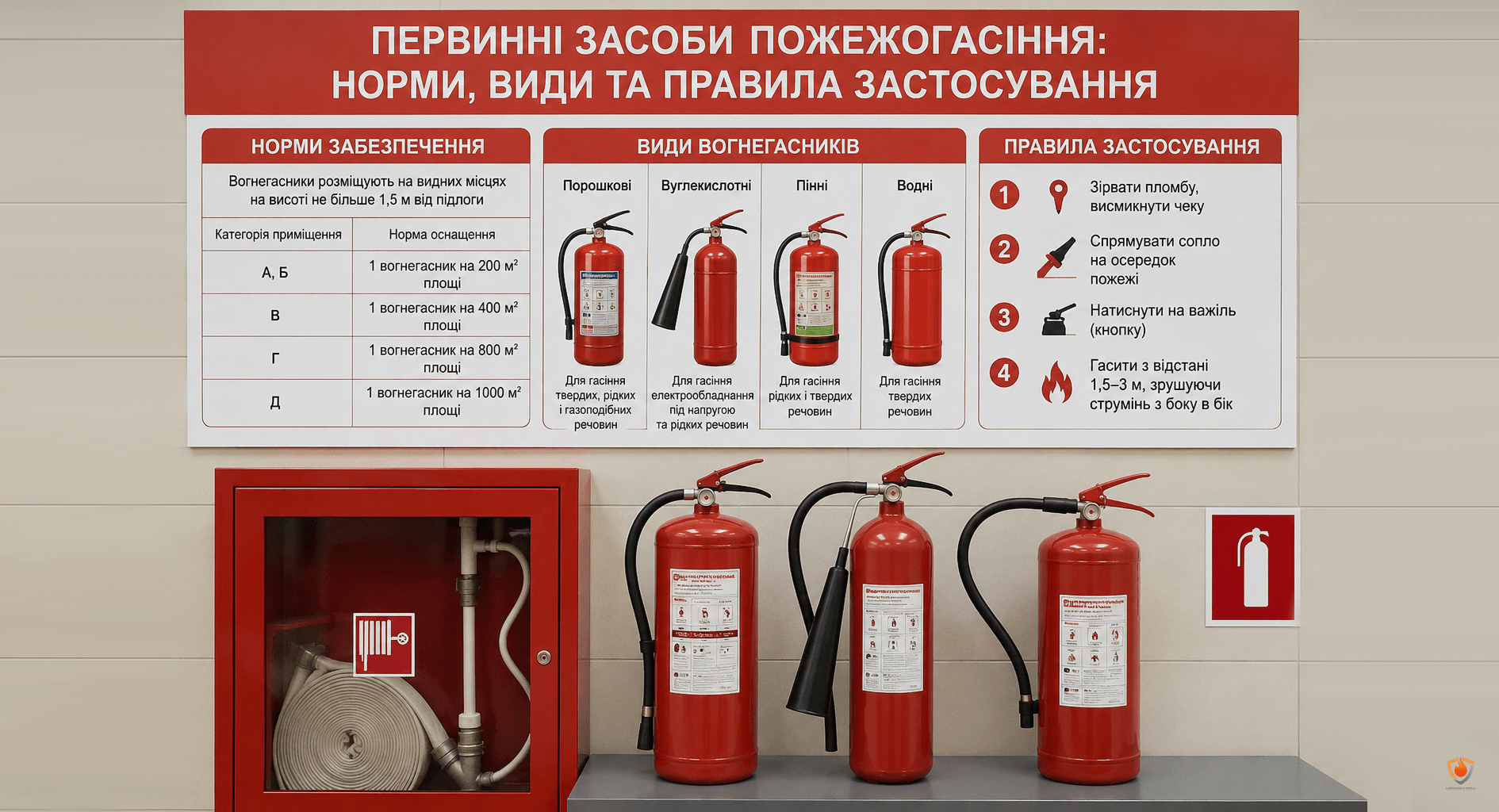
When a fire breaks out on site, the first few minutes decide everything. Not the rescue crew, who'll show up in 7–10 minutes if you're lucky, but whatever's already at hand right now — a fire extinguisher on the wall, a box of sand in the hallway, or a plain fire blanket someone hung near the electrical panel. That's what primary fire fighting equipment actually means, and here's the paradox: plenty of business owners buy it just to check a box before an inspection, then wonder why nobody on staff knows how to use it when it actually matters.
I've been working with fire safety on various sites for a while now, and I'll say it straight — half the problems aren't about missing equipment. They're about people simply not knowing what should be there and how to use it. So let's go through this properly: what belongs on the list, what standards apply, and how this equipment actually gets used.
Ask most people what primary fire fighting equipment means, and they'll picture a red cylinder on the wall. Fair enough — the extinguisher really is the most common piece of kit. But the concept covers a lot more ground than that. Primary fire fighting equipment is the gear, tools, and materials used to put out a fire at its earliest stage, before it gets out of hand and becomes something a building can't contain on its own. That word "earliest" matters. Once a fire has taken hold of a room, no extinguisher is going to save the day — and that's worth remembering for anyone responsible for safety on site.
This category covers more than just extinguishers of various types — it also includes fire equipment cabinets, sand boxes, water barrels, fire buckets, fire-resistant blankets (sometimes called fire blankets or smothering cloths), and hand tools like fire hooks, shovels, and crowbars. Sounds a bit old-fashioned to anyone used to modern automatic suppression systems, but in practice these simple tools handle a situation faster than people expect.
To get specific, primary fire fighting equipment includes several categories of gear, and each one serves a particular purpose depending on the class of fire likely to occur on a given site.
First and most obvious — extinguishers. They come in powder, CO2, foam, water, and air-foam types. Which one you need depends on what's actually burning: electrical equipment, flammable liquids, wood, or paper. Powder extinguishers, by the way, are the most common on site simply because they're versatile — they cover nearly every fire class except metals, which need their own approach.
Second — fire equipment: buckets, shovels, sand boxes, water barrels holding no less than 200 liters (this is spelled out in the regulations, by the way, and it's exactly where people cut corners, installing smaller containers instead).
Third — fire blankets, thrown over the source of a flame to cut off oxygen. Simple method, but a genuinely effective one, especially for kitchen oil fires or if someone's clothing catches fire.
Fourth — hand fire tools: hooks, crowbars, axes. Seems like an odd fit for a firefighting list, but they're needed for breaking into structures, clearing materials, or opening up an escape route during a fire.
Bottom line, primary fire fighting equipment covers exactly the tools any person can use without special training or technical setup — unlike fixed suppression systems, which get installed by engineers and run automatically.
This is where it gets more interesting, because standards for primary fire fighting equipment in Ukraine are set out in the Fire Safety Rules, and the amount of equipment required isn't a guess — it's calculated based on room area, the building's fire hazard category, and the type of combustible materials inside.
For instance, an office space up to 800 square meters usually calls for two extinguishers per every 200 square meters, though the number shifts depending on the fire class expected for that specific room. For a production shop with elevated fire risk, the calculation is different — it also factors in flammable substances on site, energized electrical installations, and how many people typically work there at once.
Fire equipment cabinets deserve a separate mention — one cabinet is installed per roughly 5,000 square meters, and what goes inside is strictly regulated too: extinguishers, a shovel, a hook, a bucket, a sand box, a blanket. Looks like bureaucracy on paper, sure. But it's exactly this kind of structure that prevents situations where an entire warehouse has one ancient extinguisher and nothing else.
When someone comes to me about equipping a facility with primary fire fighting equipment, my first piece of advice is always the same — don't start with the shopping list. Start with the calculation. First you determine the site's fire hazard category (A, B, C, D, E in the local classification), then you calculate the area of each room separately, and only then do you figure out how much of what type of equipment you actually need.
A mistake I see constantly — buying identical extinguishers for the whole site without accounting for what each room actually needs. In a server room, a powder extinguisher can do more damage to the equipment than the fire itself, so those spaces need CO2 or clean-agent extinguishers instead. A commercial kitchen is its own case entirely — it needs equipment specifically rated for grease and oil fires; a standard powder extinguisher just won't do the job there.
One more thing people tend to overlook — placement. An extinguisher sitting in a manager's locked office is practically useless from a safety standpoint. Equipment needs to be somewhere freely accessible, no higher than 1.5 meters off the floor, clearly marked with a sign, and not buried behind furniture or boxes — which happens constantly in warehouses.
The biggest gap in fire safety on most sites isn't missing equipment — it's people not knowing how to use what's already there. Primary fire fighting equipment and its use need to be covered in safety briefings, and that's not a box-ticking exercise — it's an actual skill, one that needs to be practiced at least once a year, not just signed off on in a logbook.
A powder extinguisher, for example, works like this: pull the pin, aim the nozzle at the base of the flame (not the top — that's the most common mistake), squeeze the lever, sweep side to side. Sounds simple enough on paper. It's a different story the first time you're holding one for real, with smoke around and actual panic setting in.
Rules for using primary fire fighting equipment also cover when not to fight a fire yourself. If the fire's already large, the room is filling with smoke, or energized electrical equipment is burning and hasn't been de-energized — the better move is to evacuate and call the fire department rather than try to handle it alone. That's a point briefings often skip, focusing only on extinguisher technique.
For staff training, a lot of companies put together a primary fire fighting equipment presentation — visual material with photos and diagrams, which lands a lot better than a dry instruction manual. If you don't have one yet, it's worth building — it saves time during briefings and sticks with employees far better than reading through regulatory documents.
To sum up types and applications, the logic is straightforward: the equipment gets chosen based on the fire type, not the other way around.
This classification isn't there for a report — it genuinely determines whether an extinguisher helps or makes things worse, the way it does when someone tries to put out an electrical panel fire with water.
At the end of the day, primary fire fighting equipment is a level of safety that doesn't depend on a company's budget — it depends on how seriously people take it. You can spend a fortune on automatic suppression systems and still have an expired extinguisher sitting in a hallway that nobody knows how to use. Or you can go the simple route — equip the site to standard, run real training, and let these basic tools stop a fire before it turns into a disaster.
This material was prepared based on hands-on experience working with fire safety on various sites.