

Ten years ago, when a fire protection engineer recommended installing a sprinkler system simply because "the regulations require it," few clients questioned the decision. Today, customers often come with a specific request of their own—and the mistake they make is usually not choosing the wrong system, but misunderstanding what that system is actually meant to accomplish in their particular facility. An automatic fire suppression system is not a single box filled with water or gas that you can purchase as a turnkey solution and forget about. It is a combination of engineering solutions, each designed for a specific type of fire risk. Confusing one application with another often ends up costing far more than the system itself.
Why "Automatic" Doesn't Mean "Universal"
Whenever a client tells me, "I want an automatic fire suppression system," the first question I ask is simple: What exactly is likely to burn if a fire occurs? A paper warehouse, a server room, a solvent processing area, and an underground parking garage all present completely different challenges. Trying to protect them with the same solution is practically impossible. Automatic fire suppression systems differ not only in the extinguishing agent they use—water, gas, foam, or dry chemical—but also in response time, maintenance costs, and how forgiving they are when installation mistakes occur.
This is where the real work of an engineer begins, rather than the work of a salesperson. The fire hazard classification of the building must be determined, occupancy evaluated, evacuation time assessed, and—perhaps most importantly—the consequences of the extinguishing agent itself must be considered. Water from a sprinkler system may successfully stop a fire, but it can also destroy servers or paper archives just as effectively as the flames.
Sprinkler Systems: The Workhorse That's Often Underrated
Sprinkler fire suppression systems are probably the most familiar technology in the industry, and perhaps because of that, they're often taken for granted. That's unfortunate. A properly designed sprinkler network can protect a facility for decades. One of its greatest advantages is localized operation: only the sprinkler head exposed to sufficient heat activates, while the rest of the building remains dry. This is particularly important in shopping centers, warehouses, hotels, and similar facilities where evacuation takes time and panic becomes an additional risk factor.
Years ago, sprinkler systems were often designed with generous safety margins, requiring enormous water reserves for virtually any fire scenario. Today, engineers calculate water demand based on the actual fire load of the facility. This approach reduces the size of water storage tanks and pumping stations without compromising reliability. The difference is evident even in project estimates: older designs are often around one-third more expensive than modern systems built to the same safety standards.
Deluge Systems: When You Need to Flood the Entire Area
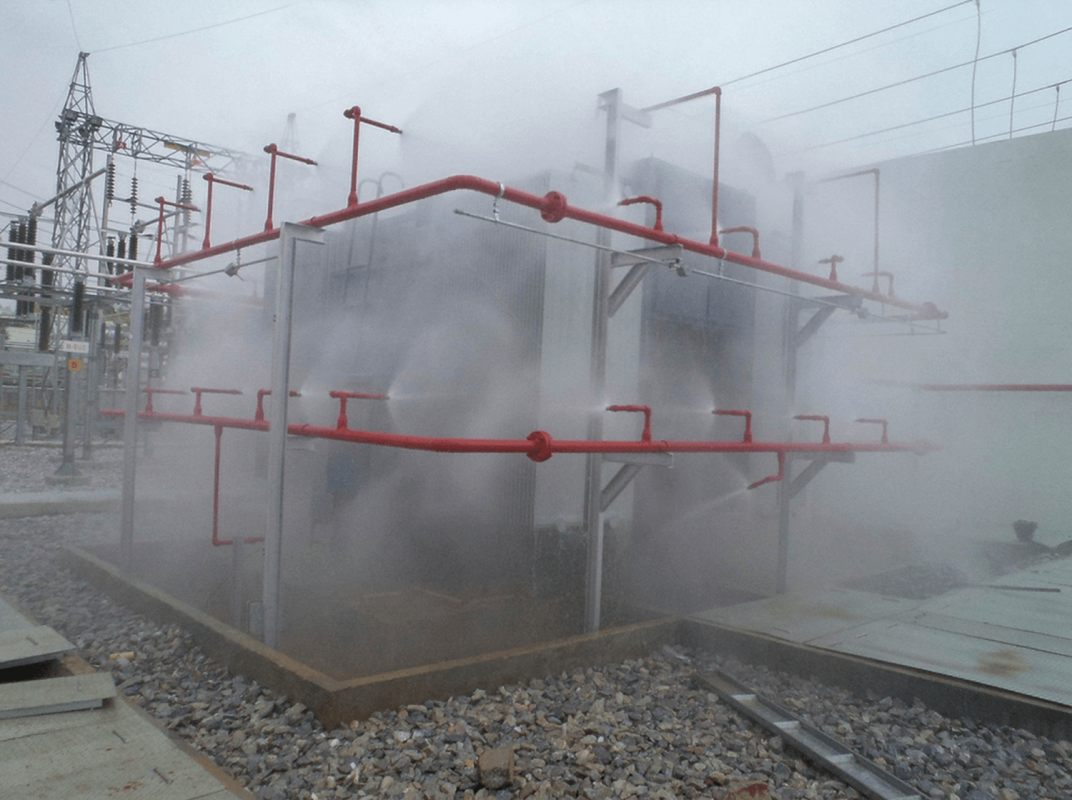
A deluge fire suppression system differs from a sprinkler system in one fundamental way: all open nozzles discharge simultaneously throughout the protected zone once the system is activated. This makes deluge systems ideal for fire barriers, theater stages, aircraft hangars, and industrial production lines with exceptionally high fire risks, where flames may spread faster than localized suppression can respond. The downside is obvious—water consumption is enormous, and without a properly designed drainage system, the protected area can quickly turn into a swimming pool.
I once consulted on a project where the client wanted a deluge curtain protecting the entrance to a production facility but overlooked one seemingly minor detail: floor drainage. The system was installed and commissioned successfully, but during the very first acceptance test, water flowed through a service opening into the neighboring room. Fixing that small oversight took an entire week and ultimately cost more than the deluge curtain itself.
Gas and Dry Chemical Systems: When Water Isn't an Option
Gas fire suppression systems are installed where water or foam simply cannot be used—server rooms, archives, electrical switchgear rooms, museums, and similar facilities. Inert gases or clean agents extinguish fire either by reducing oxygen concentration or interrupting the combustion process without leaving moisture or damaging sensitive equipment. These systems are more expensive than sprinklers and require airtight rooms. If gas escapes through leaks, the required extinguishing concentration cannot be maintained.
Dry chemical fire suppression systems tell a different story. They are more versatile across various fire classes and are often less expensive than gas-based solutions. They are commonly installed in vehicles, small technical rooms, and facilities handling flammable liquids. Their main disadvantage is the cleanup required after activation. Although sensitive electronics generally suffer less damage than they would from water, the dry chemical residue still requires extensive manual cleaning.
In practice, the following solutions are typically recommended for different applications:
- Server rooms and archives: gas fire suppression systems, sometimes aerosol systems.
- Warehouses and commercial buildings: sprinkler systems, occasionally complemented by deluge water curtains at loading entrances.
- Industrial facilities handling flammable liquids and vehicles: dry chemical fire suppression systems.
- Theater stages, aircraft hangars, and high-risk fire spread zones: deluge systems.
Smoke Extraction: The Part Many Projects Overlook
Smoke extraction is a topic that deserves special attention, especially when considered alongside fire suppression systems. Many clients focus entirely on extinguishing the fire, forgetting that smoke is what claims most lives long before the flames themselves become the greatest threat. Toxic combustion products spread faster than the fire, and without an organized smoke extraction system, even a perfectly functioning fire suppression system cannot guarantee a safe evacuation.
Designing fire suppression and smoke extraction systems separately was common practice fifteen or twenty years ago, and such projects can still be found today. Modern engineering follows a different approach. Fire suppression and smoke control should be treated as a single integrated system in which smoke dampers, exhaust fans, and sprinklers operate according to one coordinated automation sequence. This eliminates many problems during commissioning, such as smoke vents opening before the suppression system activates, unintentionally feeding the fire with fresh oxygen.
What Really Determines the Right Choice?
Budget certainly matters, but it should never be the primary deciding factor. What matters most is the building's fire hazard classification, the presence of occupants, the value of the assets being protected, and the speed at which a fire must be controlled. Fire suppression systems selected solely because they are inexpensive usually end up being either unnecessarily oversized or, even worse, incapable of providing adequate protection. The latter is by far the greater risk.
A good fire protection engineer will never begin by asking, "How much do you want to spend?" Instead, they'll ask, "What exactly are you protecting, and what would happen if the system failed to respond in time?" The answers to those questions determine whether the right solution is water, gas, dry chemical, or a combination of several technologies protecting different parts of the same facility. This hybrid approach is actually quite common. For example, a warehouse may be protected by a sprinkler system, while an adjacent server room relies on a dedicated clean-agent gas suppression system. Both become part of one integrated fire safety strategy, coordinated through a common control system.
The most important takeaway is simple: there is no universal fire suppression solution. Anyone who promises a single system that works equally well in every situation either doesn't fully understand fire protection engineering or is trying to cut corners at the expense of your safety. Neither option is acceptable when people's lives, property, and business continuity are at stake.