

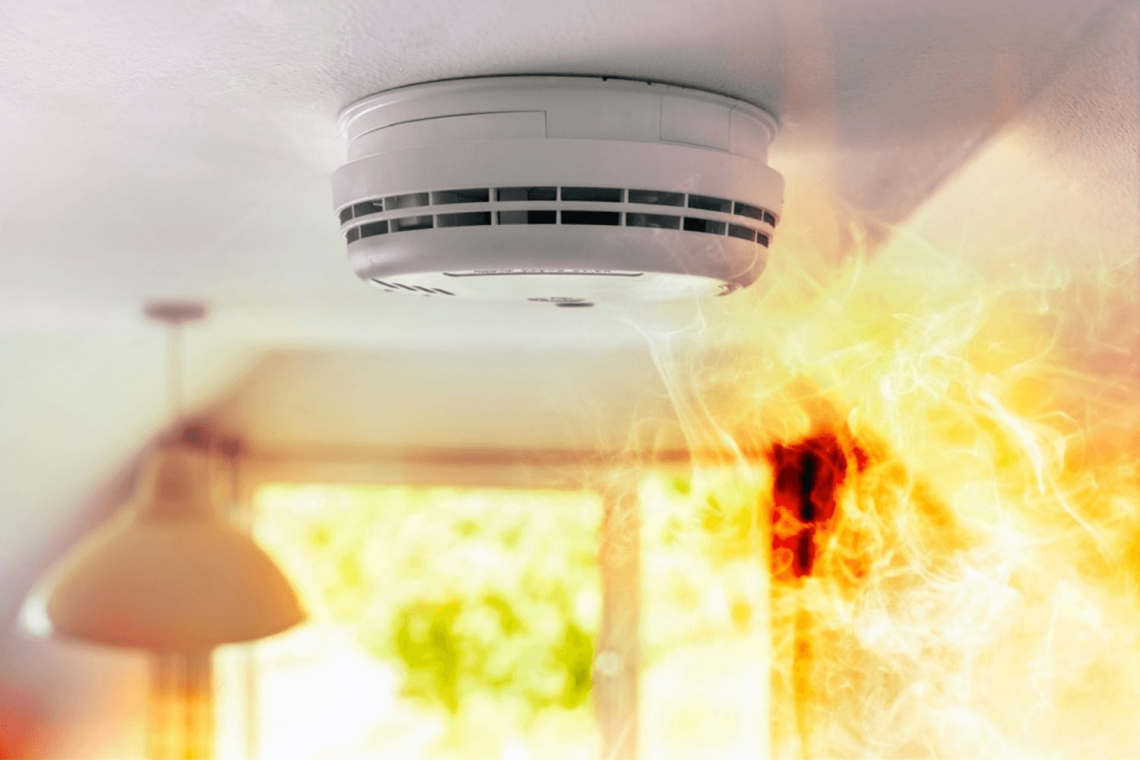
There’s a strange pattern: business owners usually start taking fire alarm systems seriously only after an incident—either at their own facility or somewhere nearby. As long as everything is running smoothly, a fire alarm system is often viewed as little more than a regulatory requirement needed to pass inspections. Then someone watches a warehouse burn to the ground in ten minutes because of faulty wiring, and suddenly the attitude changes overnight.
I'm not going to convince you that a fire alarm system is a must-have—you already know that if you're reading this article. Instead, let's talk about how these systems actually work, what their installation involves, and what businesses can realistically expect to pay in today's market.
What Makes Up a Fire Alarm System?
A fire alarm system is much more than a detector mounted on the ceiling. It is a complete system consisting of fire detectors (smoke, heat, or multi-sensor devices), a fire alarm control panel, communication loops or wireless connections, notification appliances (sirens, strobes, and sometimes voice evacuation systems), and, when required, a communication module that sends alarms to a monitoring center or facility manager. Every component has a specific purpose, and cutting corners on any one of them usually becomes obvious the first time the system experiences a fault.
Ten or fifteen years ago, most buildings relied on basic addressable—or even conventional—fire alarm systems that simply identified the affected zone and activated a siren. Today, addressable analog systems are becoming the standard. They identify the exact detector that triggered the alarm, allowing responders to locate the source of smoke quickly without searching an entire floor.
How a Fire Alarm System Works — In Plain English
A detector monitors changes in its environment, such as rising temperature, smoke density, or, in some cases, carbon monoxide concentration. It sends this information to the fire alarm control panel, which determines whether the signal is a false alarm—for example, steam from a kitchen—or a genuine emergency. If the threat is confirmed, the panel activates the notification devices and, depending on the configuration, forwards the alarm to security personnel, a monitoring station, or even directly to the emergency services.
One important point is often overlooked: a fire alarm system does not extinguish a fire. Its job is to detect the incident and alert people. Fire suppression is handled by a separate system—such as a sprinkler, gas suppression, or dry chemical system—which may be integrated with the alarm system or operate independently. Confusing these two functions is one of the most common mistakes I see in technical specifications.
The Fire Alarm Installation Process: What It Looks Like in Practice
There is no universal installation scenario because every facility is different. A 200-square-meter office requires a completely different approach than a manufacturing plant covering several thousand square meters. However, the overall process usually follows the same sequence:
- Surveying the facility and determining the fire hazard classification of each area.
- Preparing the design, including calculations for detector quantity and placement.
- Obtaining approvals where required by local regulations.
- Installing the equipment and performing commissioning.
- Completing acceptance testing and officially putting the system into operation.
Design is probably the most underestimated stage of the entire project. Clients naturally want to move directly to installation because it produces visible progress, while design feels like paperwork. In reality, the design stage determines whether a detector ends up in a stagnant air pocket where smoke may never reach it in time, or whether cables are routed through locations that later become inaccessible after renovations. Fixing these mistakes after installation is usually several times more expensive than getting them right from the beginning.
Fire Alarm System Installation: Where Mistakes Are Most Common
Installers I've worked with tend to agree on one thing: the biggest problems rarely come from the equipment itself—they come from poor coordination between contractors. Electricians install their wiring, HVAC contractors run their ductwork, and before long the fire alarm cable is routed next to high-voltage power cables without proper shielding, leading to electrical interference and nuisance alarms. Or a smoke detector is installed directly beneath an air supply diffuser, where moving air prevents smoke from ever reaching it.
Another common issue is trying to save money on cabling. Some contractors use standard electrical cable instead of fire-resistant cable in applications where regulations require the latter—for example, evacuation control circuits. On the surface they look identical and work the same way during normal operation. The difference becomes obvious during a real fire, when the cable is expected to remain operational for at least 15–30 minutes but instead fails within the first couple of minutes as its insulation burns away.
Fire Alarm Systems for Businesses: More Than Just Safety
There's also a practical business aspect that people rarely discuss openly: insurance. Insurance companies are increasingly refusing claims—or significantly reducing payouts—if an investigation reveals that a required fire alarm system was missing, defective, or improperly maintained. In other words, a fire alarm system is not only a life safety requirement but also an important financial safeguard for protecting business assets.
One example comes to mind. A tenant operating a small building materials warehouse installed the cheapest possible fire alarm system simply to satisfy regulatory requirements. It consisted of only a few smoke detectors and received virtually no maintenance. Two years later, a faulty space heater caused a fire. A detector activated, but the alarm signal never reached the monitoring panel because one of the wiring loops had failed—a problem that went unnoticed because no routine inspections were being performed. The fire was eventually discovered by neighboring businesses. Nearly all of the stored inventory was destroyed, along with part of the building itself. The insurance company paid less than one-third of the claimed damages because there was no evidence that the fire alarm system had been properly maintained and operational.
Fire Alarm System Costs: What Determines the Price?
Cost is usually the first topic clients want to discuss—and the one most likely to disrupt a project's budget. The price range is genuinely wide. A turnkey fire alarm system for a small office of around 100–150 m² may cost only a few thousand dollars, while a system for a manufacturing facility with a high fire hazard classification can cost several times more, sometimes by an order of magnitude.
The final price depends on much more than the building's size. The type of system (addressable or conventional), the number of alarm zones, whether voice evacuation is required instead of standard sirens, backup power capacity, and integration with smoke control or automatic fire suppression systems all affect the total cost. That's why anyone quoting an "average market price" without knowing anything about the facility can provide only a rough estimate—not a realistic project budget.
Fire Notification and Evacuation Management: A More Advanced System
Fire notification and evacuation management systems represent the next level beyond a basic fire alarm system. Their purpose is not simply to alert occupants that a fire has occurred, but to manage how people evacuate the building. These systems activate illuminated exit signs, broadcast voice instructions, evacuate different floors in a controlled sequence to prevent overcrowding in stairwells, and automatically lock or unlock designated doors depending on the emergency scenario.
For large shopping malls, office complexes, hotels, and other high-occupancy buildings, these systems are no longer optional—they are required by modern fire safety regulations. The difference between older and newer approaches is dramatic. Years ago, a single building-wide siren was considered sufficient, leaving occupants to figure out where to go on their own. Today's systems can support multiple notification methods depending on the affected zone, execute automated phased evacuation strategies, and integrate with access control systems so that turnstiles and emergency exits unlock automatically when a fire alarm is activated. They are certainly more sophisticated and more expensive, but they perform far more effectively when thousands of people must be evacuated safely in a limited amount of time.
If there's one practical takeaway from all of this, it's that choosing a fire alarm system based solely on the lowest bid is rarely a good decision. Saving money during installation almost always leads to higher costs later—either through increased maintenance, expensive upgrades, or, in the worst-case scenario, when the system fails to operate during an actual emergency. Investing in a well-designed system, an experienced installer, and regular maintenance means the only time you'll think about your fire alarm system is during scheduled inspections—not after a fire.